
Exploring the Ample Kitchen Partnership: A Kitchen Sustainability Initiative
- Andrew Steel

- 8 minutes ago
- 4 min read
When it comes to tackling food waste and promoting sustainability in the food industry, innovative solutions are more important than ever. I’ve been diving deep into how businesses, caterers, and public sector organisations can make a real difference. One standout approach is the kitchen sustainability initiative, which focuses on transforming surplus food into valuable, nutritious products. Today, I want to share insights about this movement and how a partnership with Ample plays a pivotal role in reshaping food procurement and waste management.
Why Kitchen Sustainability Initiative Matters
Food waste is a massive problem worldwide, and the UK is no exception. Every year, tonnes of perfectly edible food end up in landfill sites, contributing to greenhouse gas emissions and lost resources. But what if we could flip the script? What if surplus farm produce could be redirected into kitchens, creating delicious meals and reducing environmental impact?
This is where the kitchen sustainability initiative steps in. It’s about more than just cutting waste; it’s about building a circular food economy. By sourcing surplus ingredients from farms and turning them into nutritious products, businesses can:
Reduce their carbon footprint
Support local farmers by providing an additional revenue stream
Offer customers high-quality, sustainable food options
Comply with increasing regulations on waste and sustainability
I’ve seen firsthand how this approach not only benefits the environment but also enhances brand reputation and operational efficiency.

How the Ample Kitchen Partnership Supports Sustainability
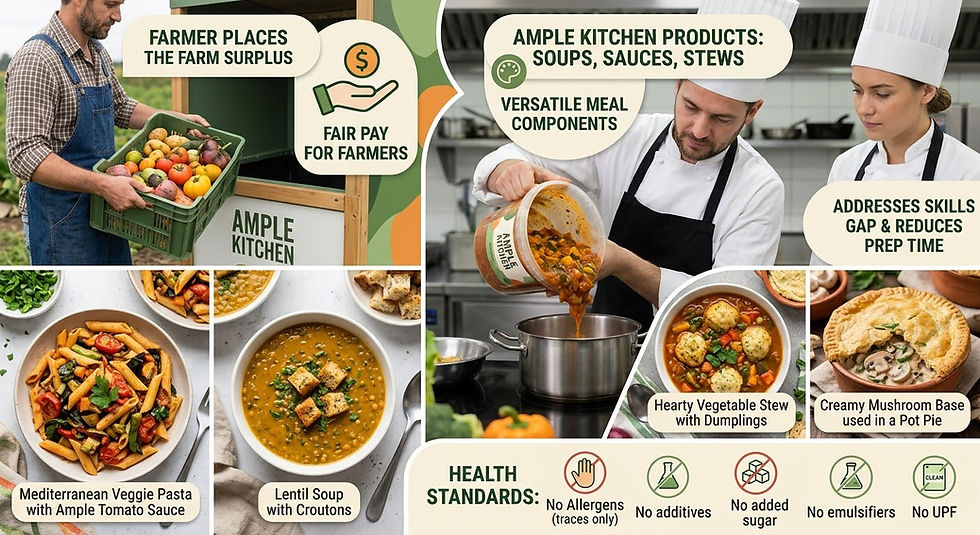
The Ample business model is a prime example of how collaboration can drive change. This partnership connects farms with surplus produce to businesses that can use these ingredients creatively and efficiently. The result? Less waste, more value, and a stronger local food system.
Here’s how the partnership works in practice:
Farm Surplus Collection: Farmers identify excess crops that might otherwise go unsold.
Ingredient Processing: Ample transforms these raw ingredients into ready-to-use products.
Distribution to Businesses: Caterers, public sector kitchens, and other food businesses receive these products for their menus.
Waste Reduction and Revenue Generation: Farmers earn from produce that would have been wasted, and businesses reduce their food costs and waste.
This model is a win-win. It’s practical, scalable, and aligns perfectly with the goals of any kitchen sustainability initiative.
Practical Steps to Implement a Kitchen Sustainability Initiative
If you’re considering adopting a kitchen sustainability initiative, here are some actionable steps to get started:
1. Assess Your Current Food Waste
Begin by tracking what food is wasted in your kitchen. Use simple tools like waste logs or digital apps to identify patterns. Knowing where waste occurs helps target improvements.
2. Build Relationships with Local Farmers and Suppliers
Reach out to local farms and suppliers to explore opportunities for sourcing surplus produce. Establishing trust and clear communication channels is key.
3. Collaborate with Organisations Like Ample
Partnering with initiatives such as the ample kitchen partnership can simplify the process. They handle surplus collection and processing, making it easier for your kitchen to access sustainable ingredients.
4. Train Your Team
Educate kitchen staff on the importance of sustainability and how to handle surplus ingredients effectively. Encourage creativity in menu planning to incorporate these products.
5. Monitor and Report Progress
Set measurable goals for waste reduction and sustainability. Regularly review your progress and share successes with your team and stakeholders.
By following these steps, you can embed sustainability into your kitchen operations and contribute to a larger movement.

Benefits Beyond Sustainability
Adopting a kitchen sustainability initiative offers more than just environmental perks. Here are some additional advantages:
Cost Savings: Using surplus produce often comes at a lower price, reducing food procurement costs.
Menu Innovation: Surplus ingredients encourage chefs to experiment and create unique dishes.
Community Engagement: Supporting local farmers strengthens community ties and promotes local economies.
Regulatory Compliance: Many public sector organisations face increasing pressure to meet sustainability targets. This initiative helps meet those requirements efficiently.
In my experience, these benefits create a positive feedback loop. As businesses see the tangible rewards, they become more committed to sustainable practices.
Looking Ahead: The Future of Sustainable Food Procurement
The kitchen sustainability initiative is gaining momentum, and I believe it will become a standard practice in the near future. With growing awareness of climate change and resource scarcity, businesses must adapt or risk falling behind.
The ample kitchen partnership exemplifies how innovation and collaboration can lead to meaningful change. By transforming farm surplus into valuable food products, it not only reduces waste but also supports farmers and businesses alike.
If you’re ready to take the next step, consider how your organisation can integrate these principles. Whether you’re a caterer, a public sector kitchen, or a business looking to improve sustainability, the opportunities are vast and rewarding.
Sustainability is not just a buzzword - it’s a practical, achievable goal that benefits everyone involved. Let’s embrace it together and make a lasting impact on our food systems.
By focusing on practical actions and partnerships, we can all contribute to a more sustainable future. The kitchen sustainability initiative is a powerful tool in this journey, and the ample kitchen partnership is leading the way. Why not join the movement and see the difference it can make in your operations?


Comments